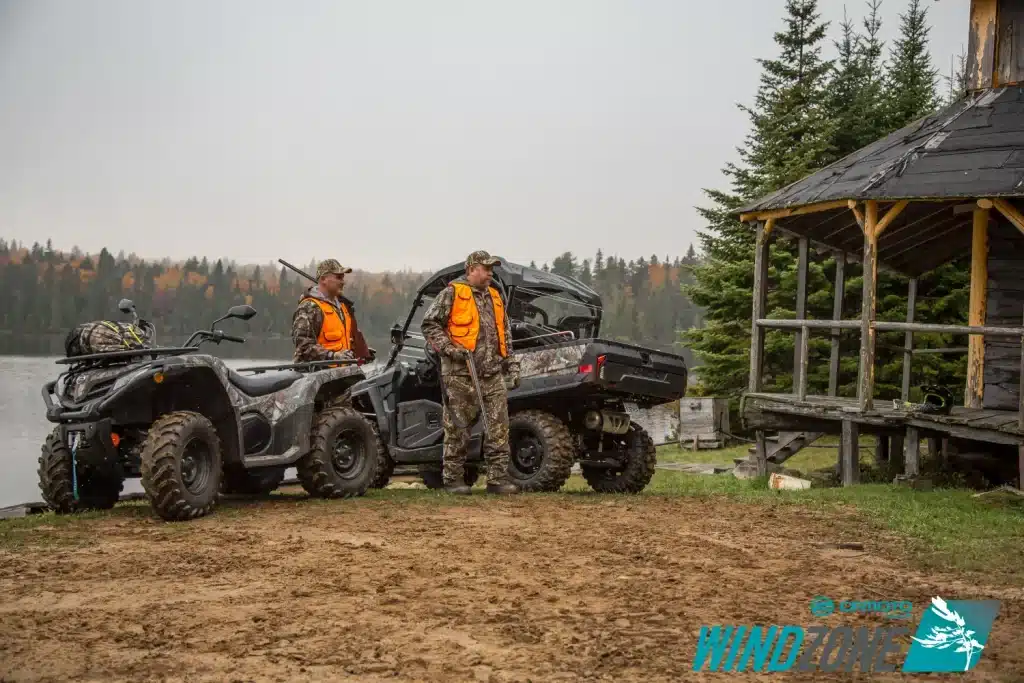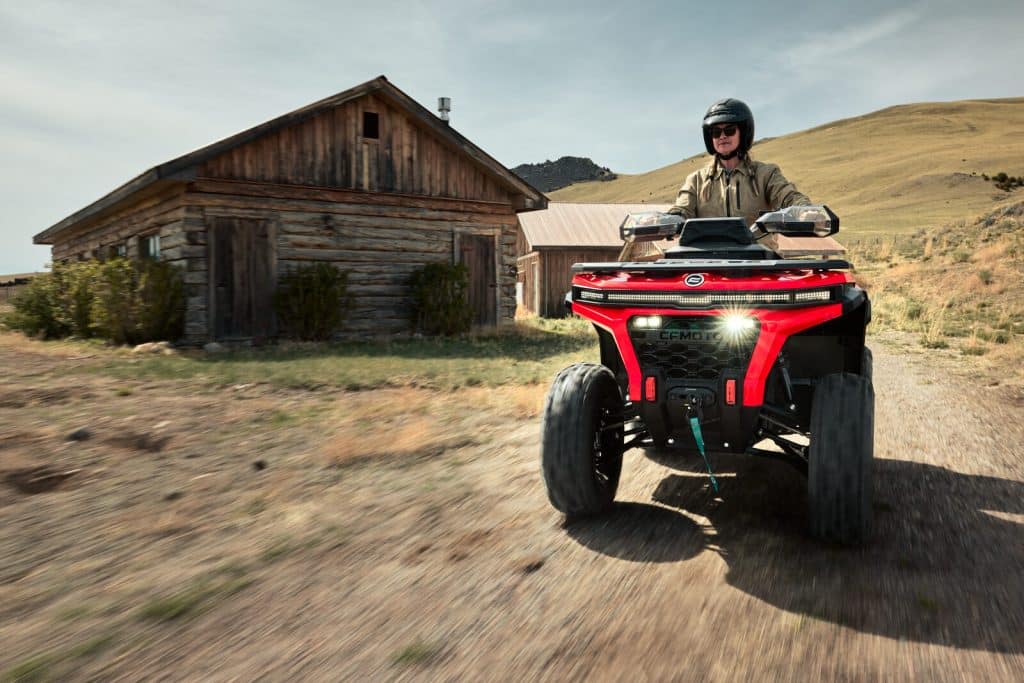


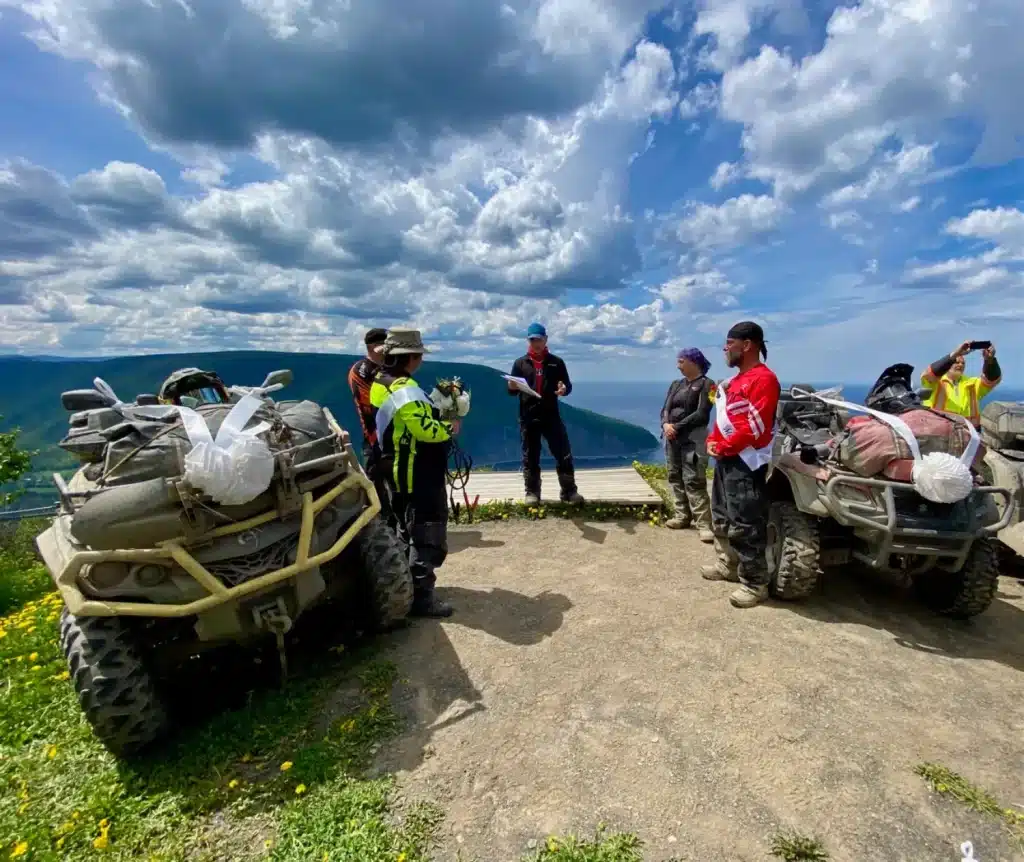
Very soon, and for the fourth time, I’ll be taking part in a Gaspé Peninsula Tour with a group of ATV riders. As a participant, I don’t have to worry about the route, accommodations, refueling stops, detours, or planning of any kind, which makes things much easier for me. However, I do need to prepare thoroughly to fully enjoy this trip, which is a dream come true for many ATV riders. Drawing on my own experience as well as that of other participants, I’ve greatly improved how I pack my gear, as well as the setup and equipment I carry on my ATV.
Setting up the ATV
The Gaspé Peninsula Tour covers 1,400 kilometers of trails in seven days—more mileage than most ATV riders cover in a year. We’ll encounter very steep climbs, very steep descents, mud, rocks, sharp pebbles like flint, rain, and possibly snow.
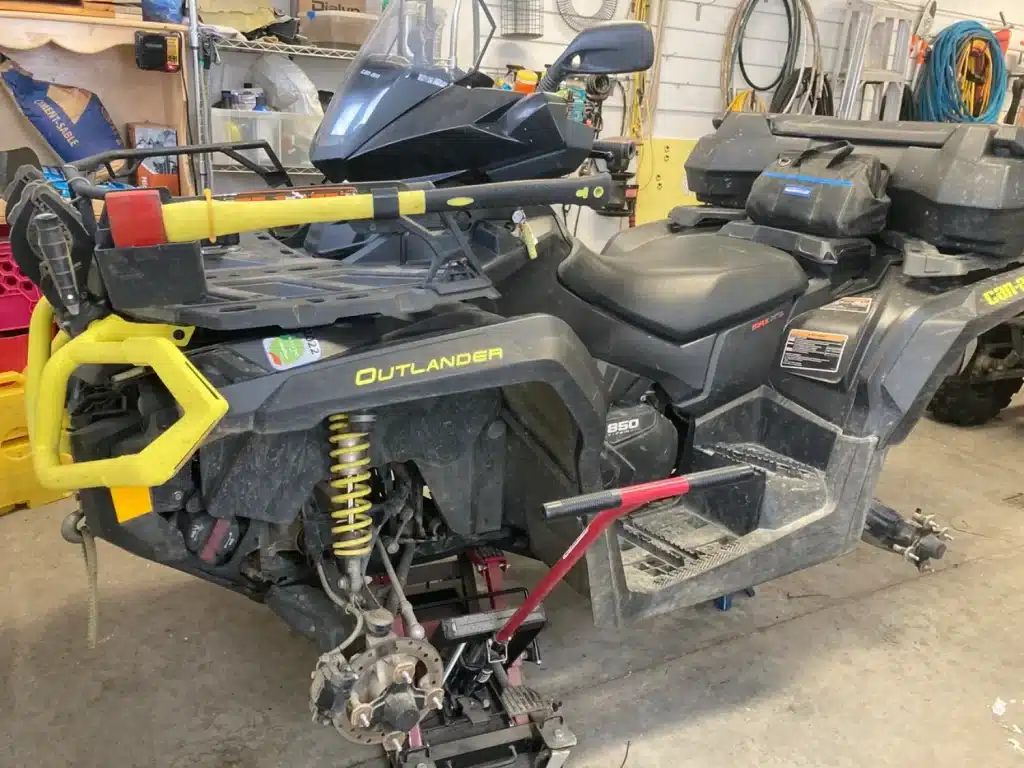
People may say that’s what ATVs are made for, but it’s still a tough test for our machines. Even though I’m not a mechanic, I perform basic maintenance myself—and, most importantly, a pre-trip inspection. If I find anything unusual or have any doubts, I consult my dealer.
- Wash the vehicle to allow for a visual inspection
- Visual inspection of the tires, suspension, seals, brake pads, drive shaft boots, radiator and its components, and front and rear lights
- Check the levels of all oils and antifreeze
- Change the engine oil
- Lubrication
- Cleaning the air filter
- Checking the winch
Packing the emergency repair kit
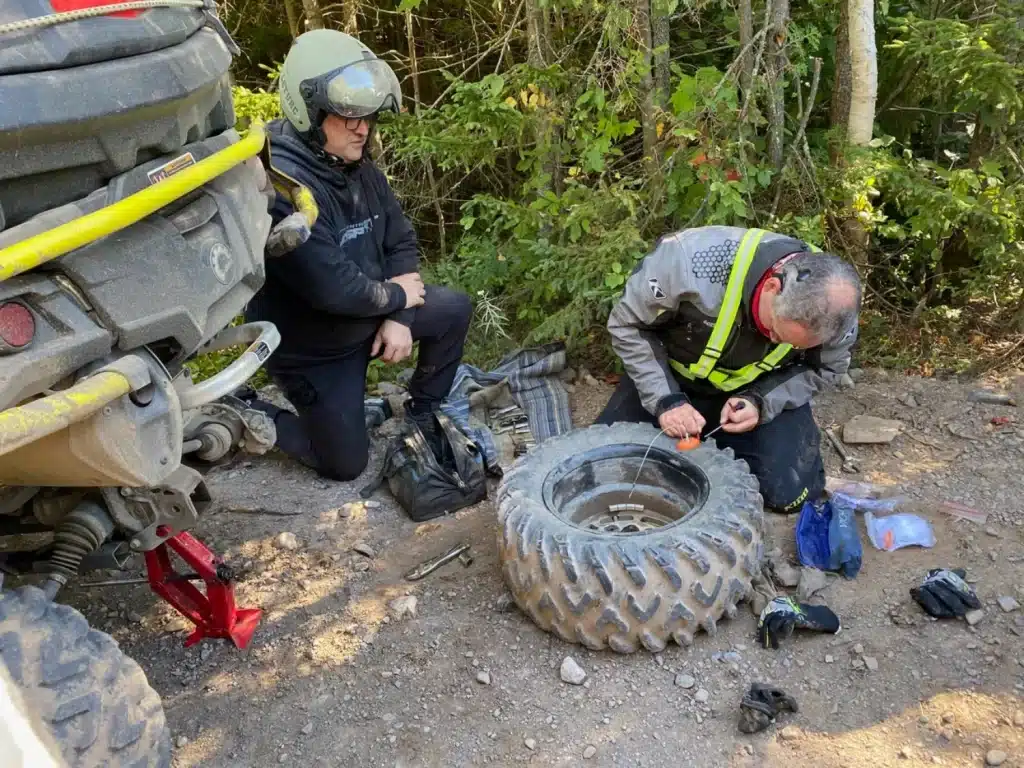
Although the tour organizers are very well equipped with repair tools, each participant should be able to perform a few minor repairs. Especially fixing a flat tire! Every year, the number of flat tires in the group ranges from 12 to 26, and my personal record is 3. I have a particular memory of one year when an ATV tore the sidewall of a tire on a narrow section of a rocky trail on a steep slope. It was beyond repair. Despite this, the whole group pitched in to perform a tire change worthy of an F1 pit stop. The ATV was lifted onto its side by hand, an electric “impact” tool appeared out of nowhere to remove the tire, while another tire—kindly lent by a participant—was passed from hand to hand until it reached the stranded vehicle. Five minutes later, the entire group was back on the road.
Quad riders are very generous in helping one another, and you don’t stay stranded alone for very long. However, every vehicle should have its own repair kit containing:
- Two packs of wicks (preferably red ones)
- A flat tire repair kit (drill, tool to hold the drill bit, soapy water)
- A compressor
- A spare belt
- The tools needed to change the belt
- Pliers, screwdrivers, wrenches
- Flashlight
- Towing strap
- Various fuses
- Electrical tape, duct tape, tie-wraps
- All the things you’d wish you had during a breakdown—time will take care of making that list.
On a trip like the Tour de la Gaspésie, the group should have a chainsaw, a remote-area first-aid kit, a satellite phone, and the contact information for the clubs visited along the route.
The Science of Packing
Will it be hot? Will it be cold? Will it rain? YES!
Packing for a seven-day trip may seem easy, but you still have to be able to carry it on your ATV. Another unforgettable memory that perfectly illustrates the situation comes to mind. As we were in line to pay for gas, the man in front of us pulled out his bright pink wallet and said to us with a laugh: With two people on one ATV, you have to make choices. It was really funny. Indeed, carrying two people’s luggage for seven days on a quad bike can present some interesting challenges. It’s less of an issue on a four-wheeler or for a single rider like me.
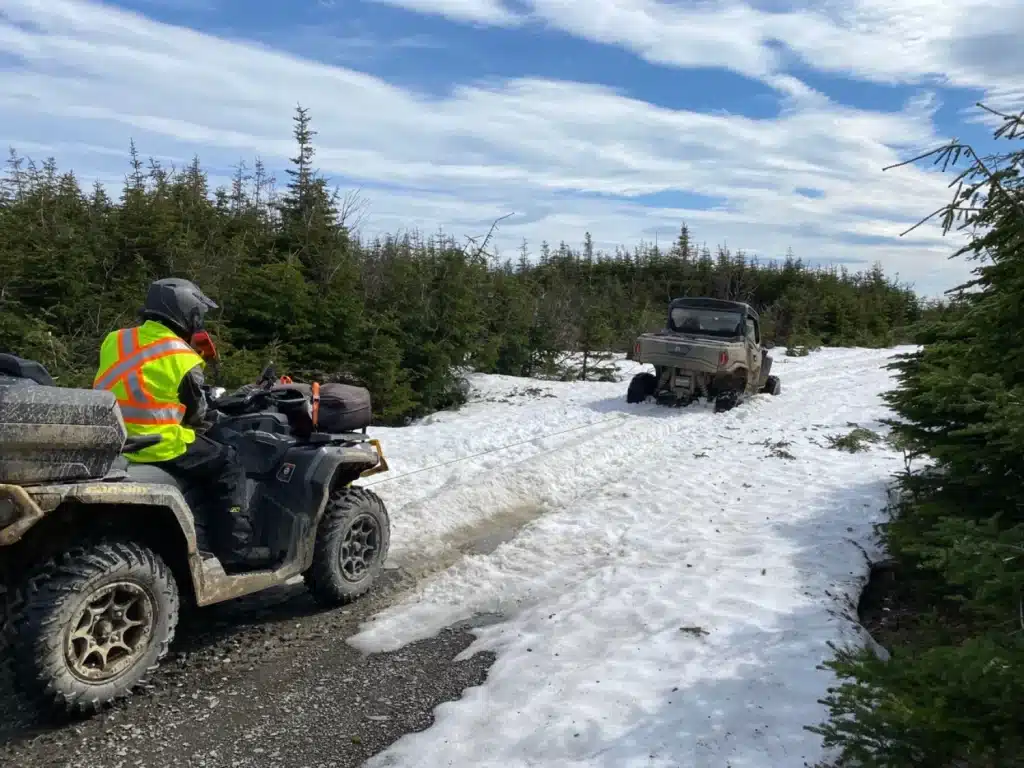
During the Gaspé Peninsula tour, the temperature can change drastically in a matter of minutes, for example when crossing the Chic-Chocs Mountains. I’ve seen a 20-degree temperature difference between the valley and higher elevations. Even in June, you might still see snow—sometimes enough to throw a few snowballs, other times enough to get stuck.
Clothing
Due to temperature fluctuations throughout the day, or in the event of a light rain shower, it’s normal to adjust your clothing to stay comfortable. So I divide my luggage into two categories: what I’m likely to wear during the hike, and everything else. The first bag will go in my rear cargo box, where it’s easy to access, and doesn’t require a waterproof bag. The other, however, will be securely fastened to the front of my ATV and will be exposed to all the elements on the trail: rain, dust, mud, or snow.
Keep the following within easy reach:
- Warm gloves, protective gloves, and cycling gloves
- Bandanas, sunglasses
- A rain kit
- Various base layers, from fleece to T-shirts
- A kit for trail breaks (cap, sunscreen, insect repellent)
- A cooler for trail lunches
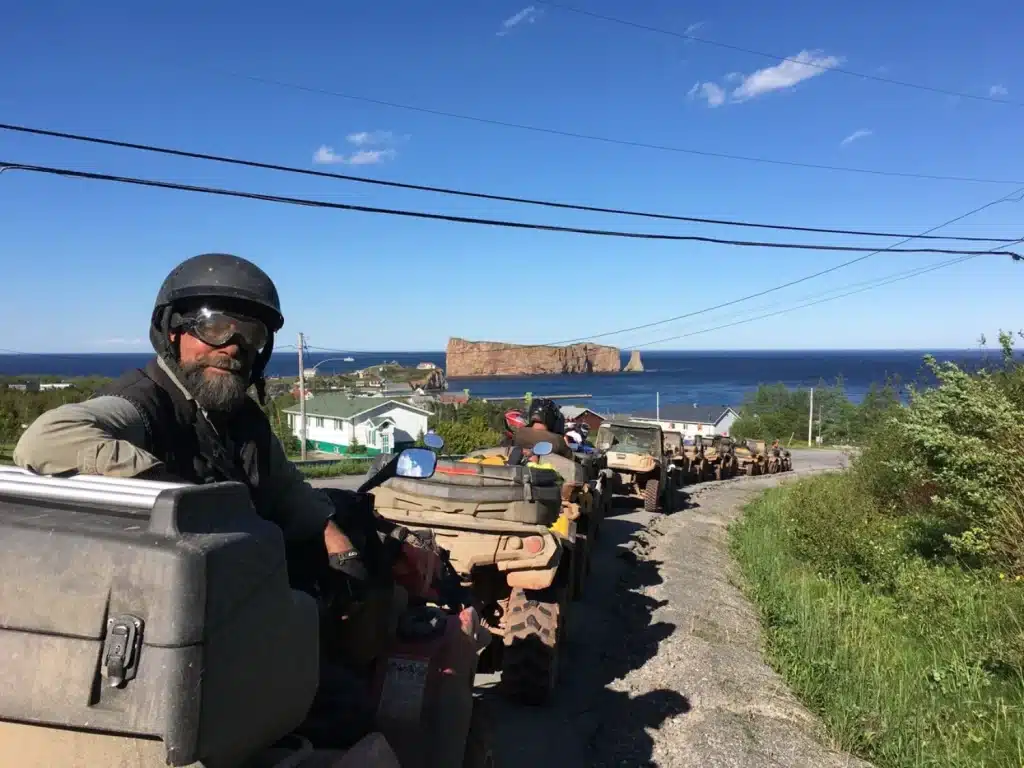
People often ask me what I wear when I’m hiking. I’m lucky to have clothing with a Gore-Tex membrane, a material that’s both breathable and waterproof. My jacket is very versatile, and I wear it in temperatures ranging from 0 to 25 degrees, whether in the sun or rain, by adjusting my layers and the ventilation openings.
My pants have the same qualities and protect me from the heat of my engine. As for footwear, I wear hunting boots that also feature a Gore-Tex membrane. Equipped this way, I stay dry as a bone even in the worst weather.
Main Luggage
For most ATV riders, the main luggage will be exposed to rain, dust, vibrations, impacts, and abrasion. The choice of bag and how it’s secured to the vehicle will determine how wet the contents get if it rains. Ideally, the bag should be waterproof. I emphasize “waterproof” and not just “water-resistant.” Some products may be water-resistant when left outside in the rain, but they’ll quickly get soaked when attached to the front of a quad bike traveling at 50 km/h in the same rain. A quick search using the keywords waterproof bag will show you hundreds of bags of all sizes. The simplest and most effective option is a model where you fold the bag’s openings over two or three times to ensure it’s watertight. I don’t recommend a waterproof zipper because mud and dust will eventually cause it to fail.
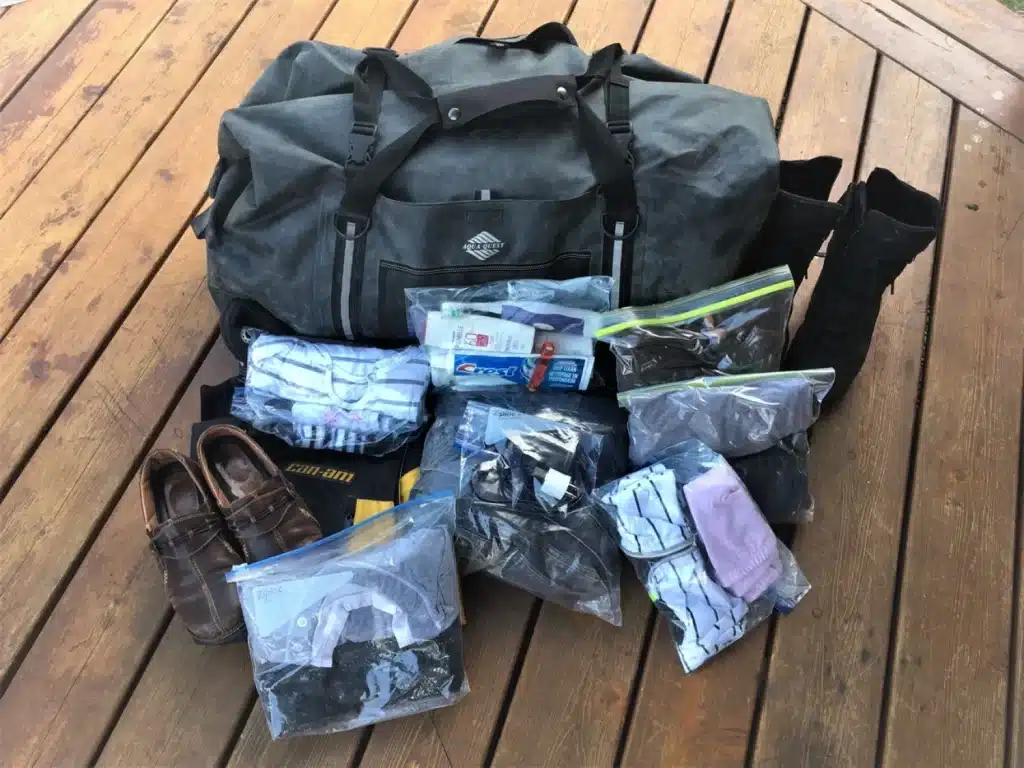
Personally, I use a 75-liter waterproof bag with the opening at the widest part of the bag. This is important for practical use, so you don’t have to empty the bag to reach items at the bottom.
In my large bag, I roll up my belongings and place them in Ziploc bags, which I squeeze before sealing to save space. One for underwear, one for T-shirts, one for shower supplies, and so on. This method offers several advantages: it keeps your bag from becoming a huge mess, allows you to separate clothes if two people are sharing the bag, and ensures your belongings stay dry even if your waterproof bag fails. Try it, and you’ll love it! (I’m using the Ziploc brand to illustrate the product, but any similar bag will do.)
Securing Your Luggage
On the trail, the ATV gets jostled—and so does your luggage. Rocky trails at high speeds put a strain on the suspension, and sometimes a rock you didn’t anticipate can crush the bag all the way to the bottom, which can give your wrists a bit of a jolt. Even so, your luggage shouldn’t move around too much. In fact, a waterproof bag is vulnerable to abrasion from friction and to tears from being pinched. You must therefore prevent the bag from vibrating continuously on its mount or having its fabric crushed against a hard part of the ATV. The combination of a ratchet strap and an elastic band is what I’ve found to work best so far. The strap holds the luggage in place during sudden or wide movements of the ATV, while the elastic band controls the slight oscillating motion. When installing, make sure no metal parts come into direct contact with the waterproof bag. A simple DIY solution using an old piece of rubber allows for safe installation of the ratchet strap. Simply cut a strip and make two slits in it to thread the strap through. This way, you can install it directly on the waterproof bag without any worries.
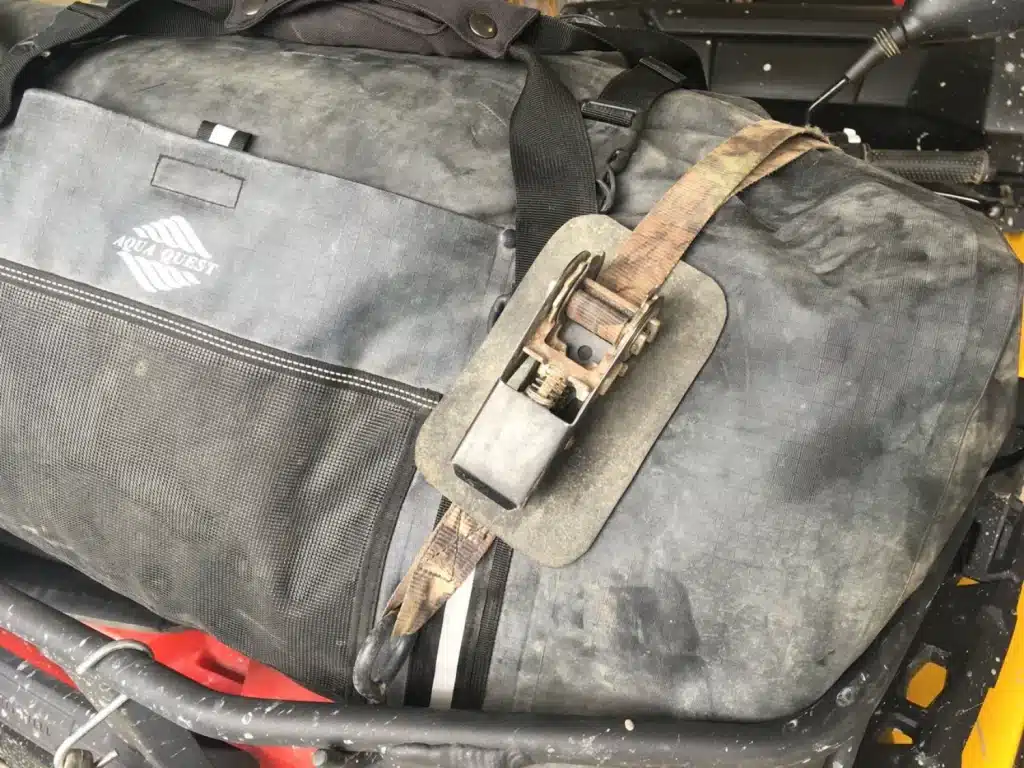
Checking the securement during the ride
Once installed and after a few minutes, the waterproof bag will slowly deflate under the pressure of the strap. You’ll need to tighten it again a few kilometers after setting off. Experience shows that if you’re going to lose any luggage, it will happen within the first five kilometers. One year, right at the start of the tour, a quad rider had failed to close his rear trunk properly. As he climbed the first hill, his entire load spilled onto the ground. We were following him and picked up his belongings, which we secured as best we could to our own vehicles. When he saw us coming with his luggage piled on top of ours, it was really funny.
So, it’s advisable and wise to check your cargo securing a few kilometers after setting off.
In wrapping up
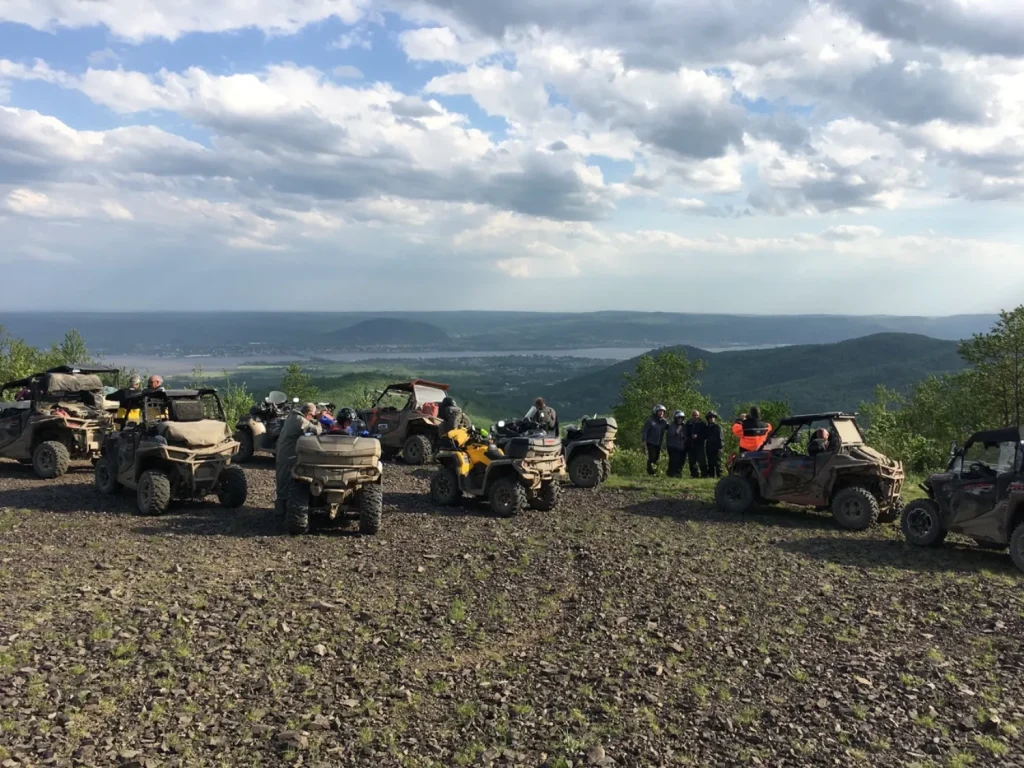
Touring the Gaspé Peninsula on an ATV is quite an adventure, and I know I’m lucky to be able to take this beautiful trip for the fourth time. As I write this, I’m in the midst of preparations, counting down the days. I hope to complete the tour without any major mechanical glitches, with just enough rain, snow, and unexpected events. I’ll be reuniting with several companions from past years, since I’m not the only one who’s done the tour multiple times (75% of the 2023 participants are repeat travelers like me). For others, this will be their first time; they’ll discover the splendors of Mont Saint-Pierre, the Chic-Chocs, Percé Rock, Bonaventure, and other little gems of the Gaspé Peninsula. They’ll experience the joy of repeated flat tires, warm radiators, and all the mutual support and camaraderie that develop within a group as they spend seven wonderful days of trail adventure together.
[D1] Okay?