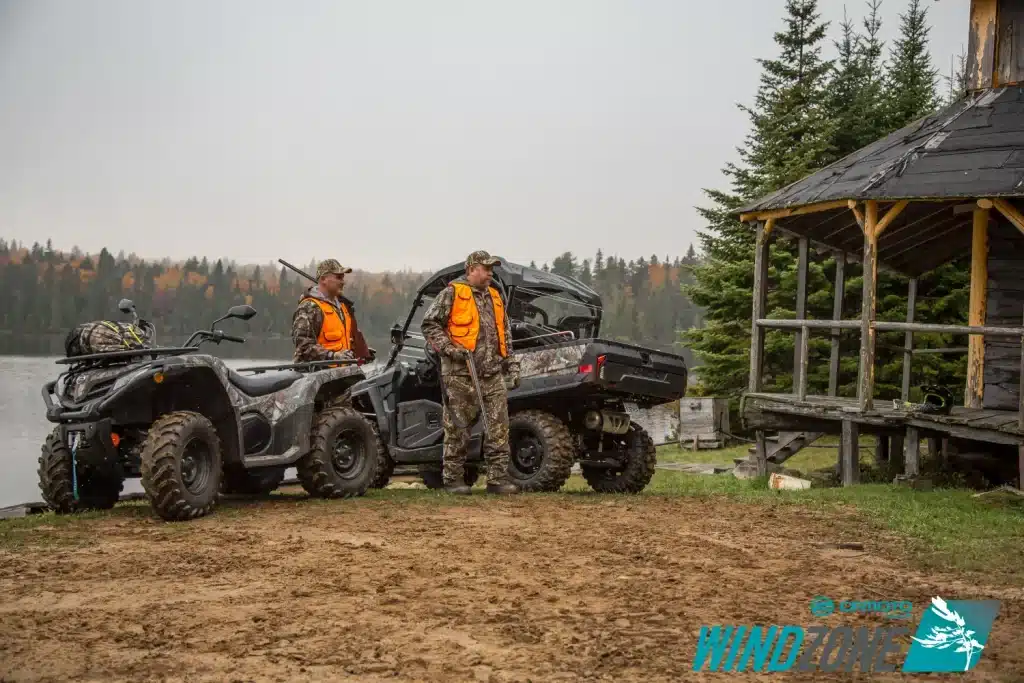


The world of hunting has always taken place in challenging terrain, and off-road vehicles greatly facilitate mobility in the field. In fact, quads are versatile vehicles that can serve as a means of rapid transportation, for hauling loads, and even as tractors in the harshest conditions. Moreover, the best-equipped side-by-side vehicles (SSVs), with their air-conditioned cabins that closely resemble a car’s interior, have effectively replaced pickup trucks on forest trails.
What is a hunting ATV?
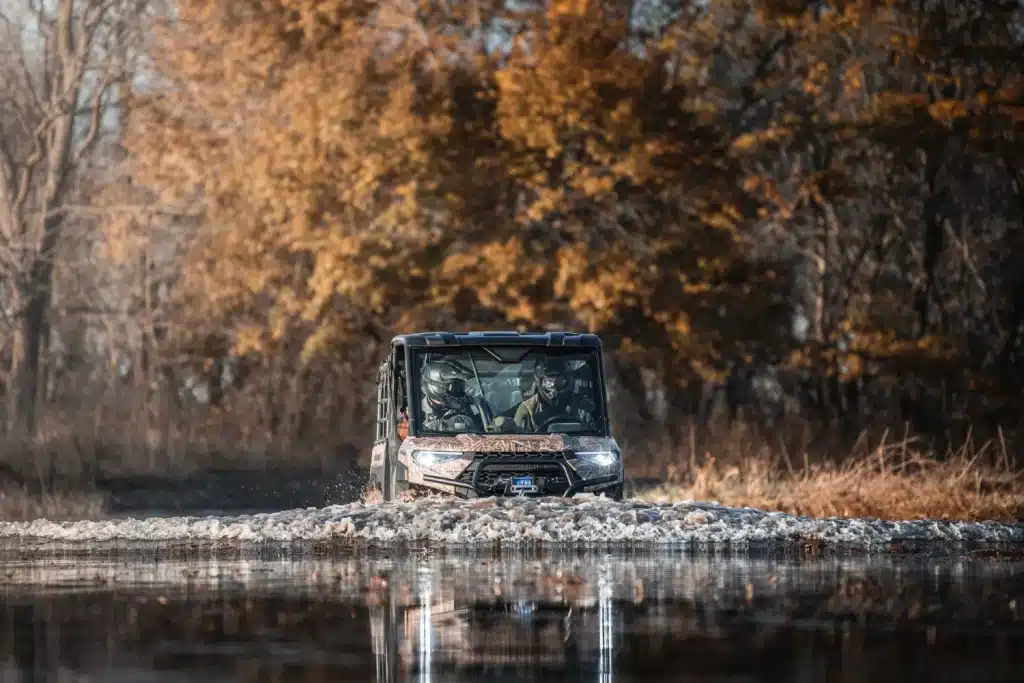
Basically, ATVs are vehicles designed for use in rough terrain. This is why they are frequently used by hunting enthusiasts. A so-called “hunting ATV” is one that has been adapted to meet the needs of hunters. The choice of vehicle and onboard equipment will vary depending on the specific needs and the type of hunting practiced by the hunters: small game, migratory birds, big game, etc. The nature of the terrain to be traversed can also determine which vehicle is selected.
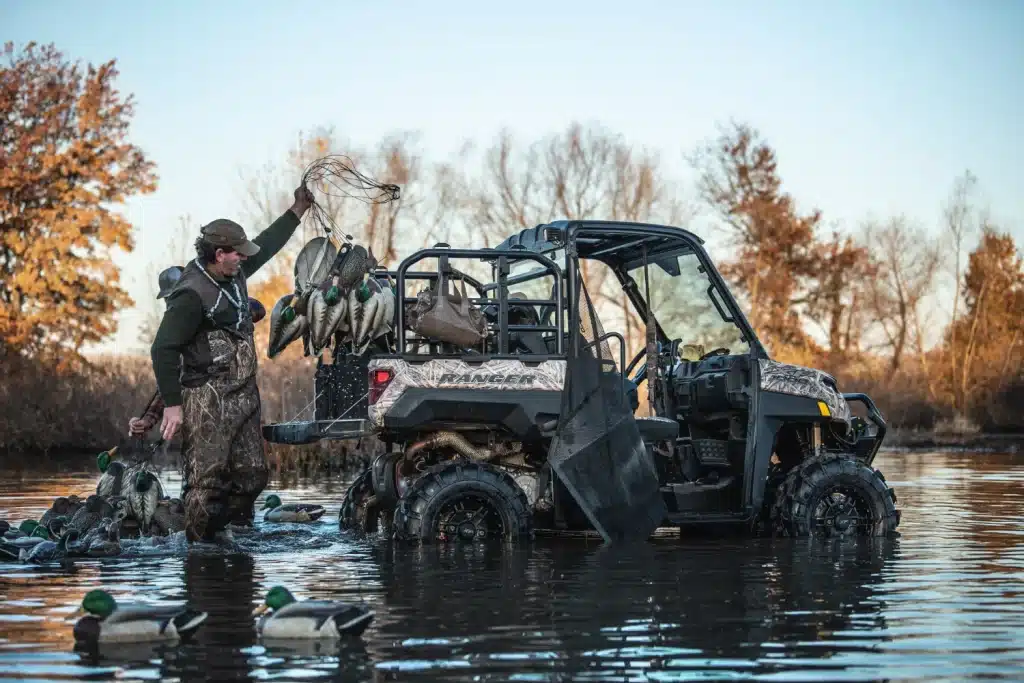
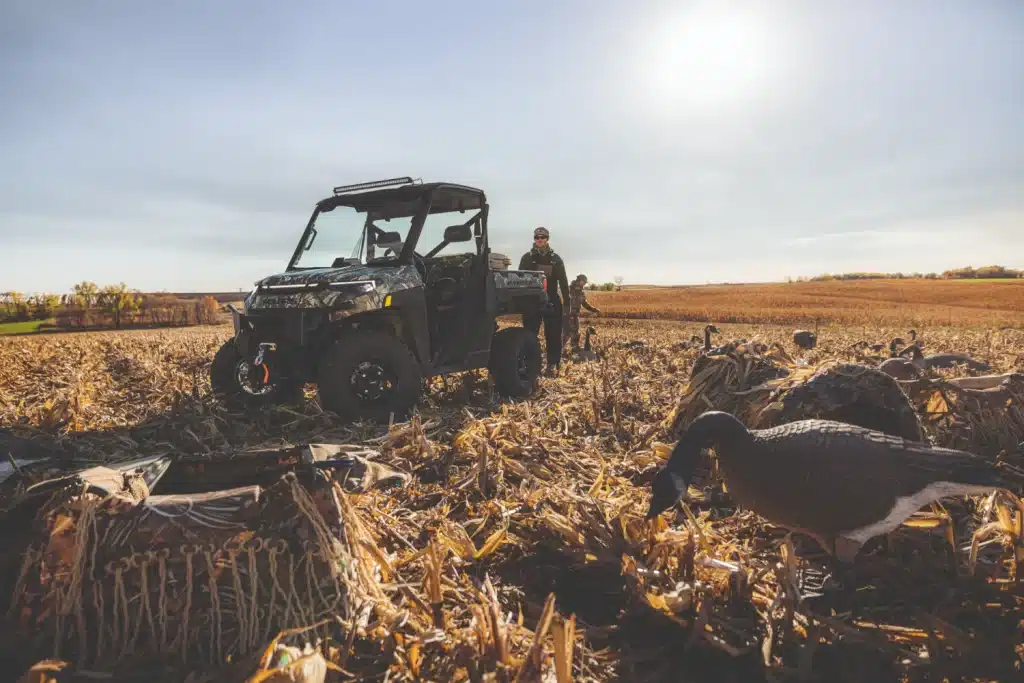
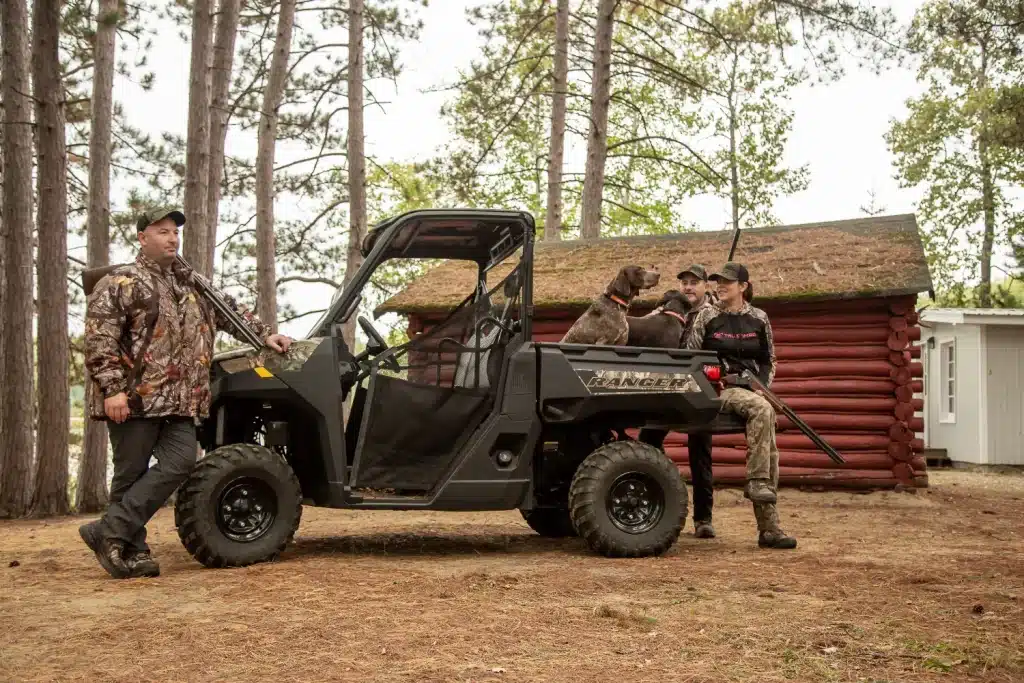
ATVs offer a wider range of options to meet hunters’ needs. They are a favorite among many hunters because they can carry two people sitting side by side (or up to six with crew cabs) instead of just one. Another major advantage is that the cargo bed can carry much more equipment and even retriever dogs. Finally, many are now equipped with enclosed cabins featuring heating and air conditioning.
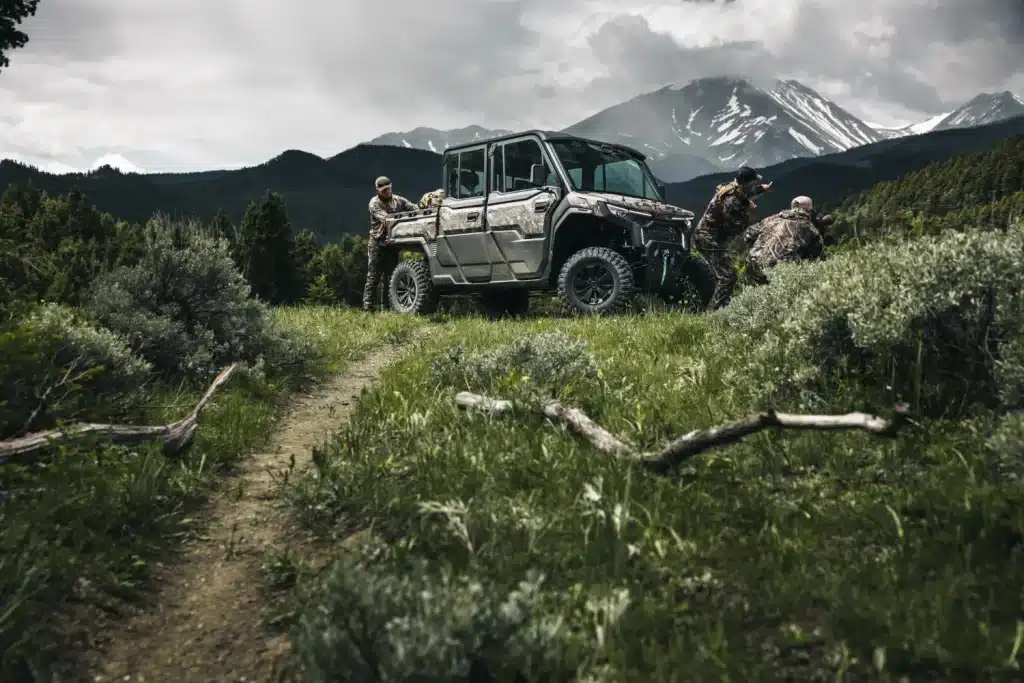
No More Manufacturers’ “Hunting-Ready” Models
An ATV can be marketed to consumers with a “coureur des bois” theme that will appeal to the hunting instincts of the target customer. For a long time now, in the traditional ATV sector, some manufacturers have offered body variants equipped with cargo beds that greatly facilitate the transport of gear. Take, for example, the Can-Am Outlander 6×6, which can carry a passenger in addition to featuring a spacious cargo bed in the rear. Polaris also offers models designed for hauling. Among them is the versatile Sportsman X2 600, which offers the best of both worlds with a cargo bed that converts into a second seat. The 6×6 configuration is also available on the Sportsman 600 6X6.
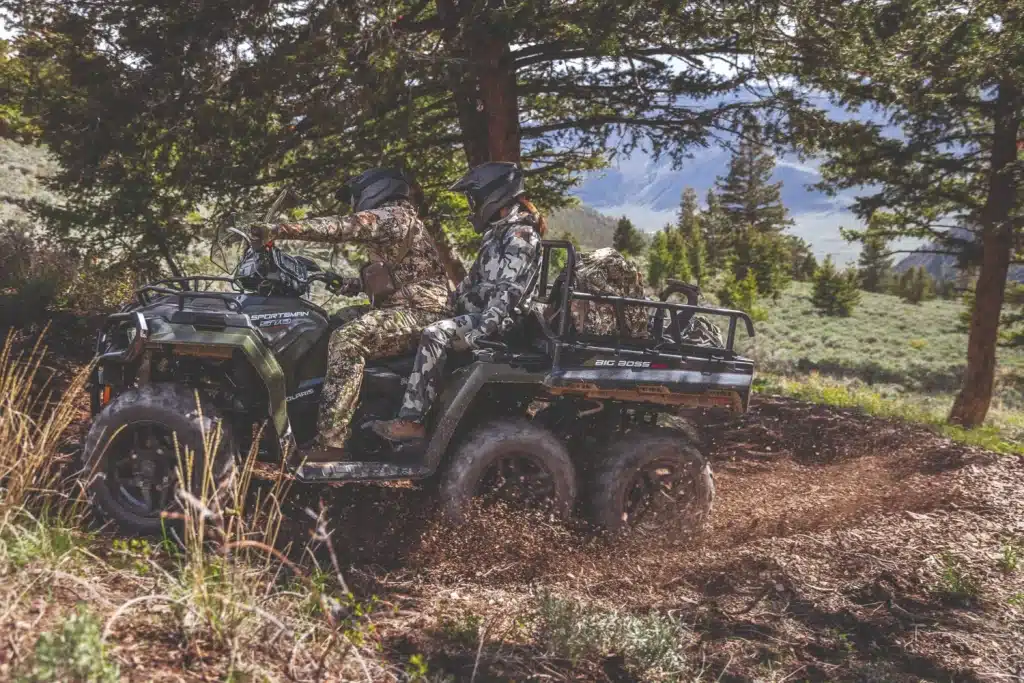
All manufacturers offer camo-finished bodies that are suitable for stealth. However, as of 2027, manufacturers no longer offer “Hunting Edition” models specifically designed for hunters out of the box.
Customizing ATVs
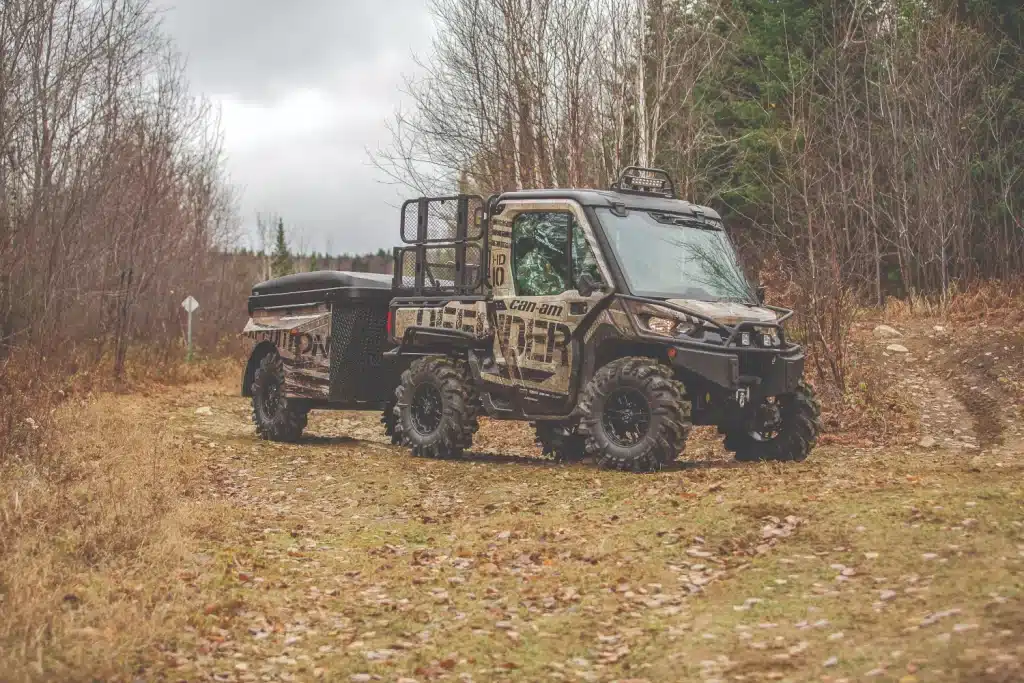
Thus, the true conversion into a hunting vehicle will be achieved by customizing the vehicle through the addition of equipment offered by manufacturers or independent aftermarket suppliers. The range of possibilities is incredible, and everyone will find a solution to meet their needs. These ATVs can be equipped with cargo racks to which extensions, side panels, dump beds, rifle or bow mounts (enclosed or open), auxiliary lights or spotlights, winches, storage compartments, camouflage body finishes (or camouflage covers), GPS devices, heated thumb rests and grips, and windshields for protection against the elements, as well as trailers adapted for off-road conditions and cabins for side-by-side models. Aftermarket equipment manufacturers have boundless creativity to offer you the product that will meet your needs.
Noise Stealth
Another potential obstacle to successful hunting with an ATV is the loud noise from the engines. The arrival of electric off-road vehicles such as the Polaris Ranger Kinetics and the Can-Am Outlander Electric allows you to travel as quietly as possible.
Due to the extra weight of the electric batteries and the range, especially when operating the winch, we feel it’s not advisable to get these vehicles stuck in remote mudflats. Electric ATVs seem better suited for travel on moderately rugged terrain. Please also note that the Polaris Ranger Kinetics has a range limited to approximately 130 km on easy, flat terrain under optimal conditions. As for Can-Am, its Outlander Electric will be capable of covering a theoretical distance of 80 km. To use these vehicles without too much worry, your campsite will need to be modern enough to provide electricity for recharging the batteries.
Considerations Before Purchasing a New ATV for Hunting
Preparing an ATV for hunting can quickly become an emotional process. It’s therefore best to approach the project with a thoughtful, four-point plan:
- Set a budget: As with any major purchase, you need to determine your requirements in terms of power, carrying capacity, etc. An impulse purchase can easily lead you to spend between $30,000 and $60,000 on a fully loaded ATV.
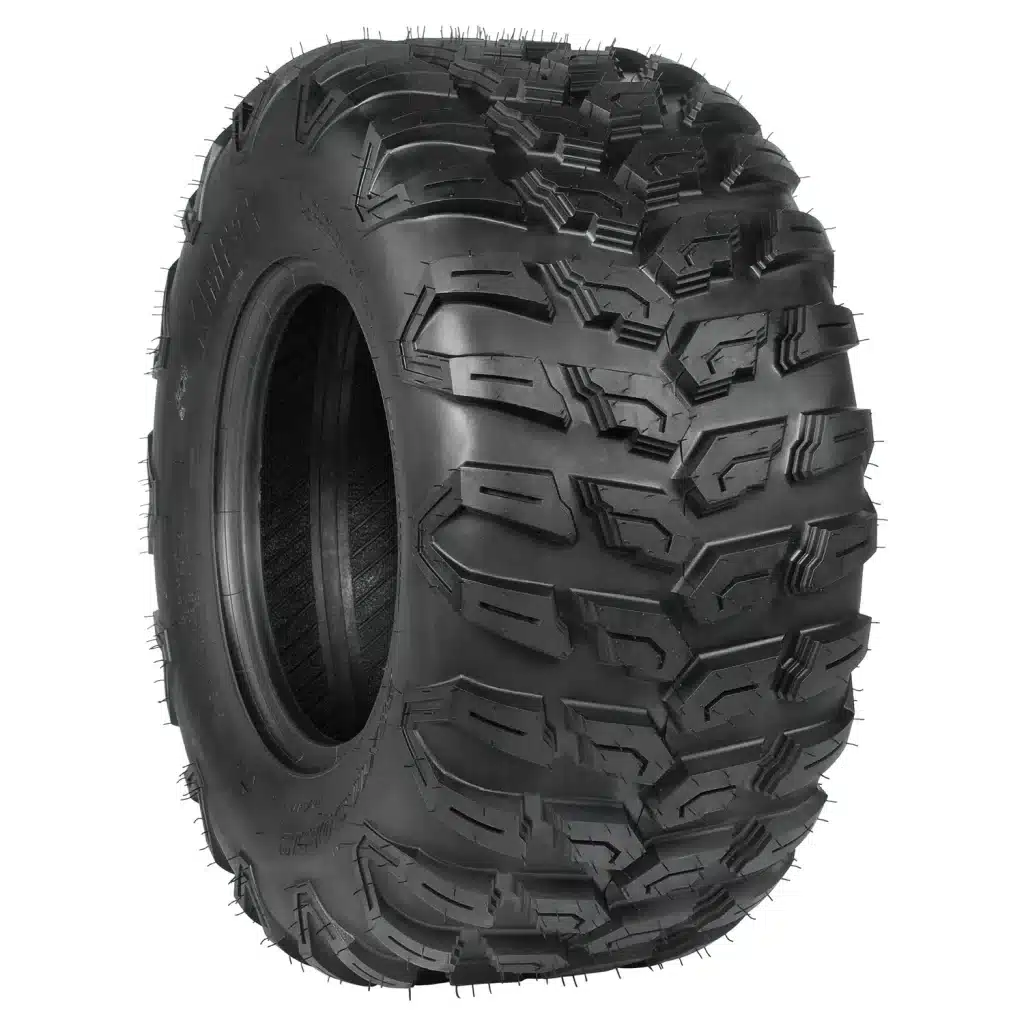
- Know your hunting terrain: Ideally, hunters should choose their vehicle based on its off-road capabilities and ruggedness. It should be equipped with 4×4 drive, have a low-range transfer case, offer good ground clearance, and, if terrain conditions require it, the owner should fit it with heavy-duty tires featuring an aggressive tread pattern that can withstand rocks and stumps. Finally, owners planning to drive in extreme terrain should equip their vehicles with skid plates to protect the drive shafts and the underside of the vehicle.
- Think about the accessories you’ll want to add and make sure you can fit them onto the vehicle you’re considering. Generally, accessories from suppliers are generic enough to fit all vehicles, but incompatibilities can sometimes arise.
- Be patient with your purchase: Buying a quad is an event where it’s easy to get carried away, especially if you let the emotional aspect of imagining yourself at your “hunting spot” on the machine you’re considering factor into the equation. Take the time to weigh the offers from retailers, including the accessories you identified in point 3.
Safety
This final point brings us to the ever-present issue of safety when using off-road vehicles in the woods. Accidents always happen when you least expect them. Even when used for hunting, an accident, such as a rollover, is not impossible.
Under no circumstances should a hunter exceed the vehicle’s load capacity. Loading a deer onto the luggage rack will shift the center of gravity, compromise stability, and increase the risk of rollover.
An ATV should never be driven with a loaded firearm or a drawn bow. Store them in the carrying device you’ve installed on your vehicle.
You must also protect yourself properly while on the move. It is very common to see hunters riding ATVs when the only required safety gear they are wearing is an orange vest. The provisions of the ATV Act still apply even when you are hunting. Consequently, wearing a helmet, protective eyewear, gloves, and appropriate boots is always mandatory.
Since preparing for the hunting season is also part of the fun of this activity, you’ll likely enjoy outfitting your off-road vehicle to meet your needs. May hunting gods be with you, and happy hunting!