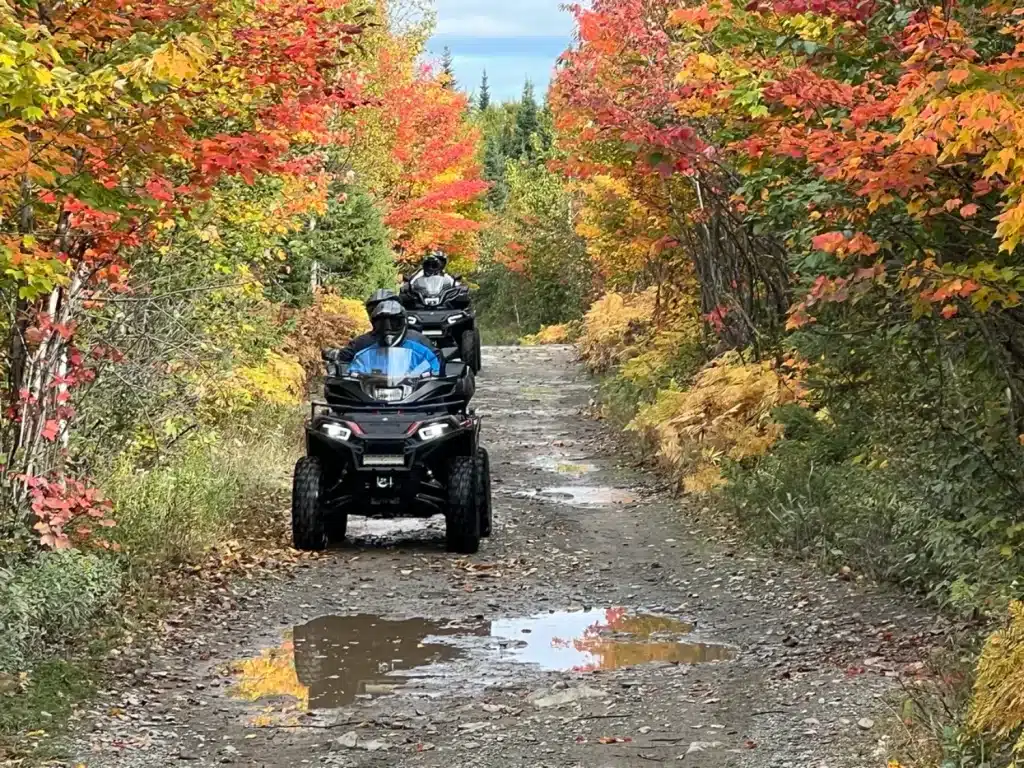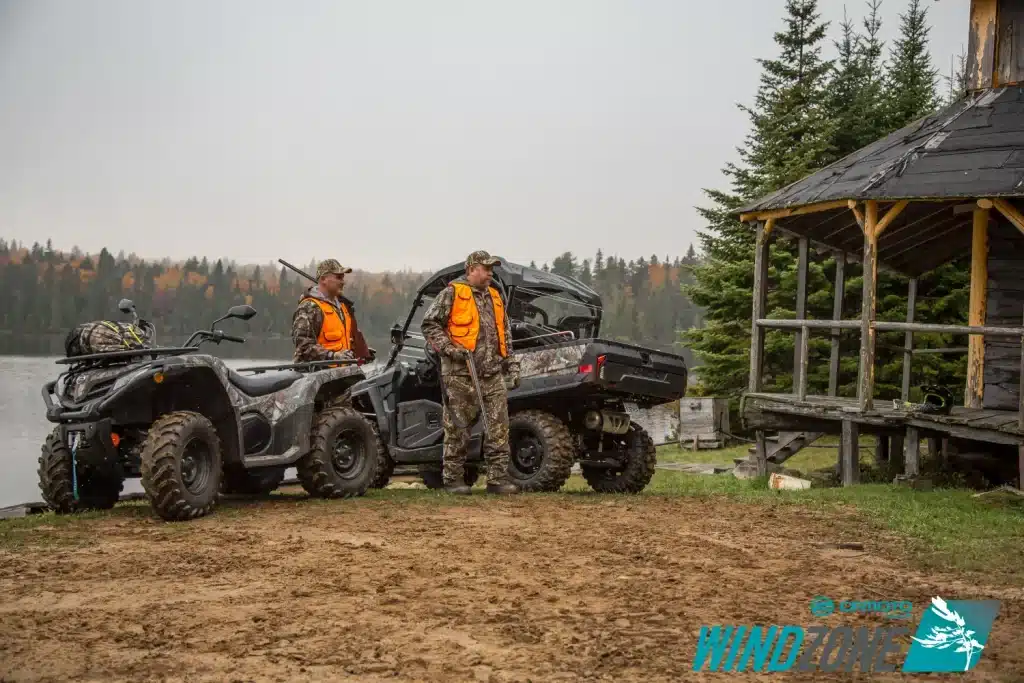


Fall is an ideal season for riding on federation trails. Even though mornings are cooler, temperatures warm up during the day, and the sunsets are magnificent, enhanced by autumn colours that add another dimension.
Whether your ATV has been ridden all summer or is coming back out for the season, it is important to check its mechanical condition and bring a basic set of tools. With the change of season, keep an eye on the weather and adapt your clothing to changing conditions, preferably by dressing in layers. Far from being a luxury, a first-aid kit takes up little space and is essential in the woods.
Planning your route and knowing the hunting seasons and hunting areas helps you avoid closed trails or tensions on the ground.
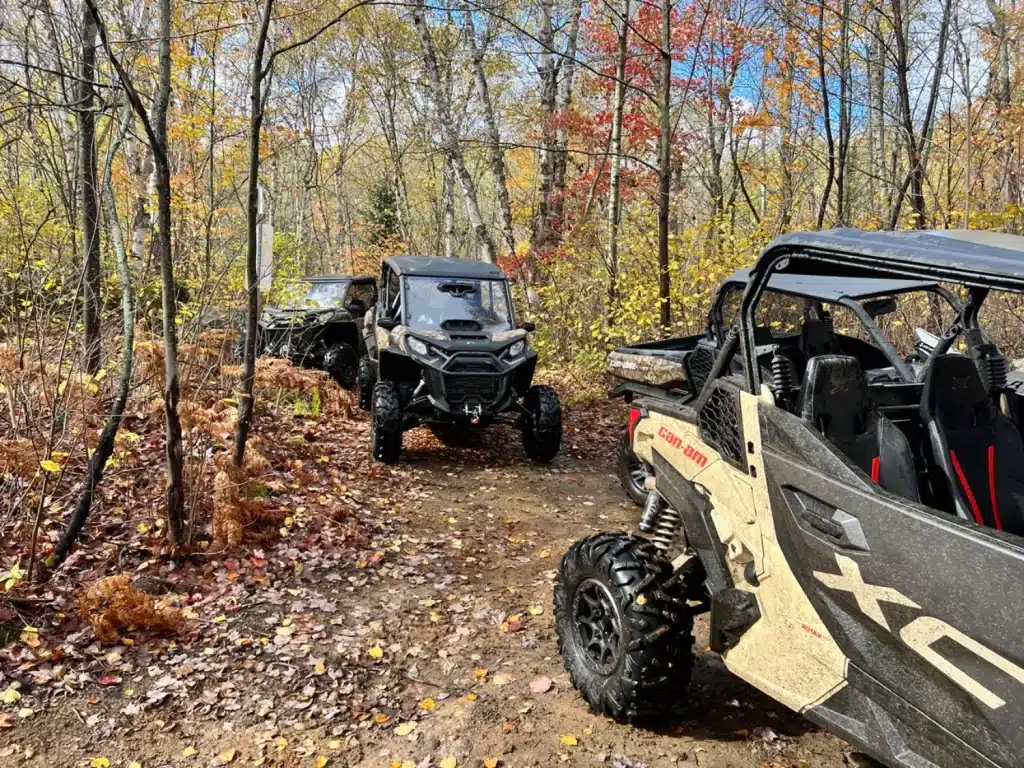
There are plenty of hazards on the trail at this time of year, with water crossings, mud and dead leaves that are beginning to fall.
Checking Your ATV
Before heading out for a ride, it is important to take the time to walk around your ATV or side-by-side and check it over. Engine fluids are the first things to check. Engine oil and coolant levels must be checked when cold. Be mindful of pressure when opening the coolant cap. If you top up the level, do not exceed the maximum mark.
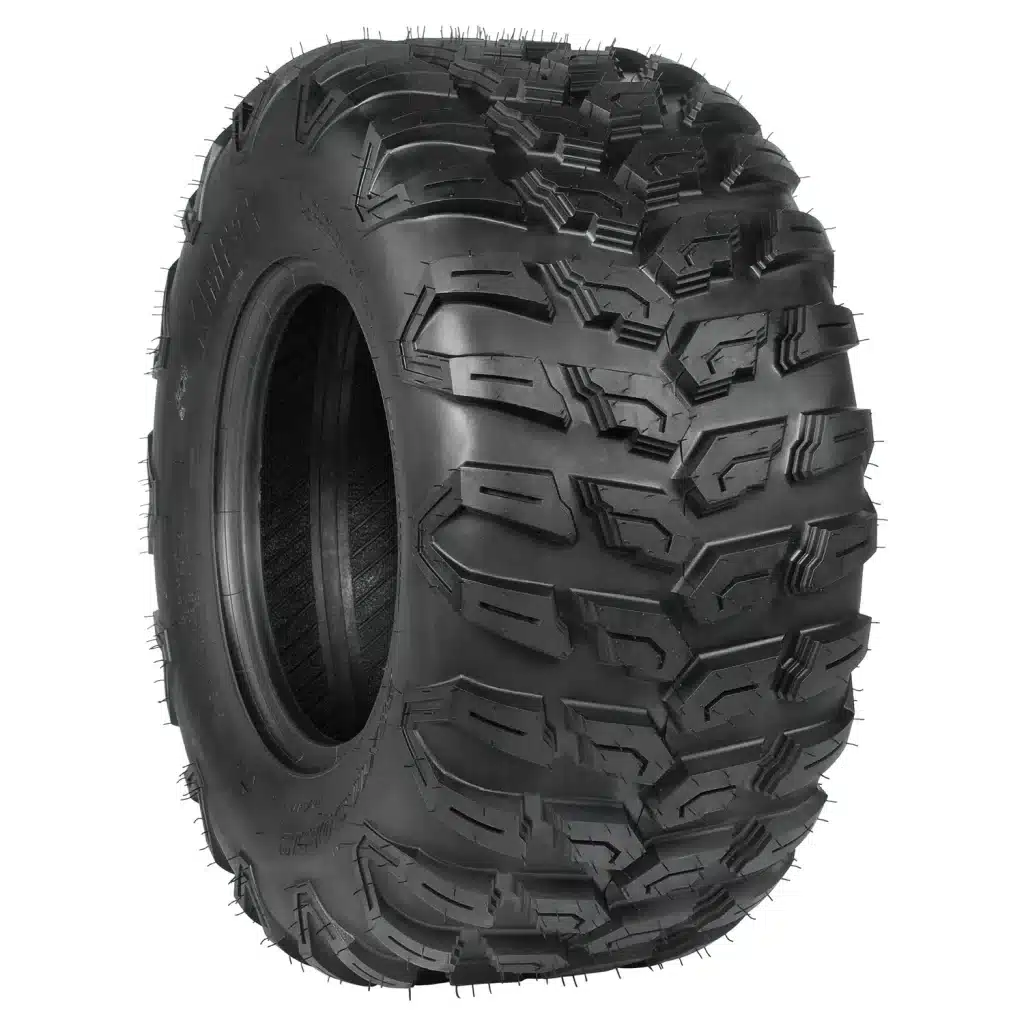
Pay particular attention to your tires: they provide contact with the ground, and traction can be poor in rainy, muddy conditions and with leaves beginning to fall.
You will find the recommended pressure on a label attached to the vehicle’s frame or in the manufacturer’s owner’s manual.
Examine the tire surfaces for cracks or signs of abnormal wear.
The air filter allows the engine to breathe properly. It must be inspected because it traps dust. There are different types: a foam filter is washed and then coated with oil to retain dust. The other version is made of paper and must be replaced regularly. A simple dry cleaning can extend its service life if it is relatively new.
The brakes must be checked, at a minimum by operating the lever and pedal to make sure there are no fluid leaks. Headlights and other lights must be inspected because good visibility is important at nightfall.
The Kits to Bring
For greater peace of mind, you need to be able to make makeshift repairs deep in the woods. Every ATV has its original tool kit, to which a few items should be added: an adjustable wrench, locking pliers, a small compressor and a portable power pack, not to mention self-locking cable ties, or “tie-wraps,” rounded out by the inevitable duct tape. A strap will allow for an improvised recovery or tow, complementing the winch fitted to many off-highway vehicles.
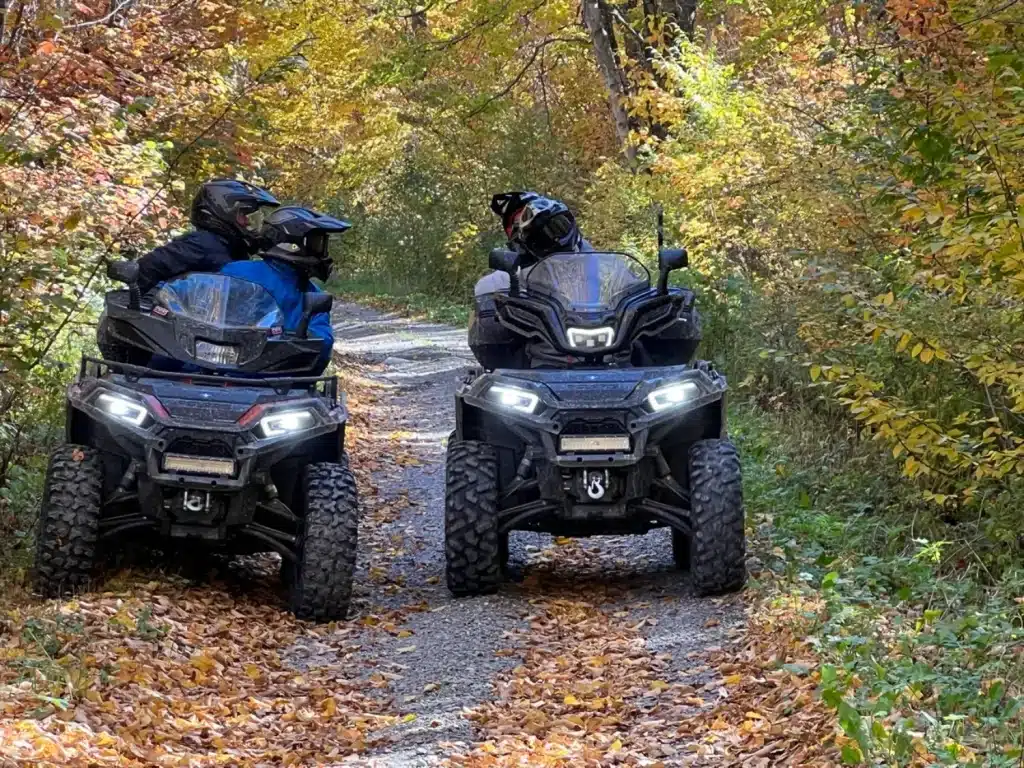
The other kit you must not forget is the medical first-aid kit. It should be compact and contain bandages, gauze pads, antibiotic ointment and an emergency blanket. This is a basic kit you can buy in stores.
Out on the Trail
To find your way along the trail, you cannot rely solely on the cellular network. Go to iQuad, plan your route and download it. Do not hesitate to call the clubs along your route for more information.
To avoid stress if a trail patrol officer checks your documents, bring your trail access pass, registration certificate, proof of mandatory liability insurance and driver’s licence (car, motorcycle, scooter or tractor).
If you are 16 or 17 years old, or if you ride a single-seat ATV fitted with an add-on passenger seat, you will need to present the certificate of competency issued by the FQCQ.
Equipment and Comfort
To withstand fall’s changing temperatures, adopt a three-layer system. Your base layer should be made of a breathable technical fabric that prevents moisture from perspiration from building up. The middle layer, made of wool or fleece, is worn in the morning and evening to preserve body heat. Finally, the outer layer is waterproof and windproof to protect you from the elements.
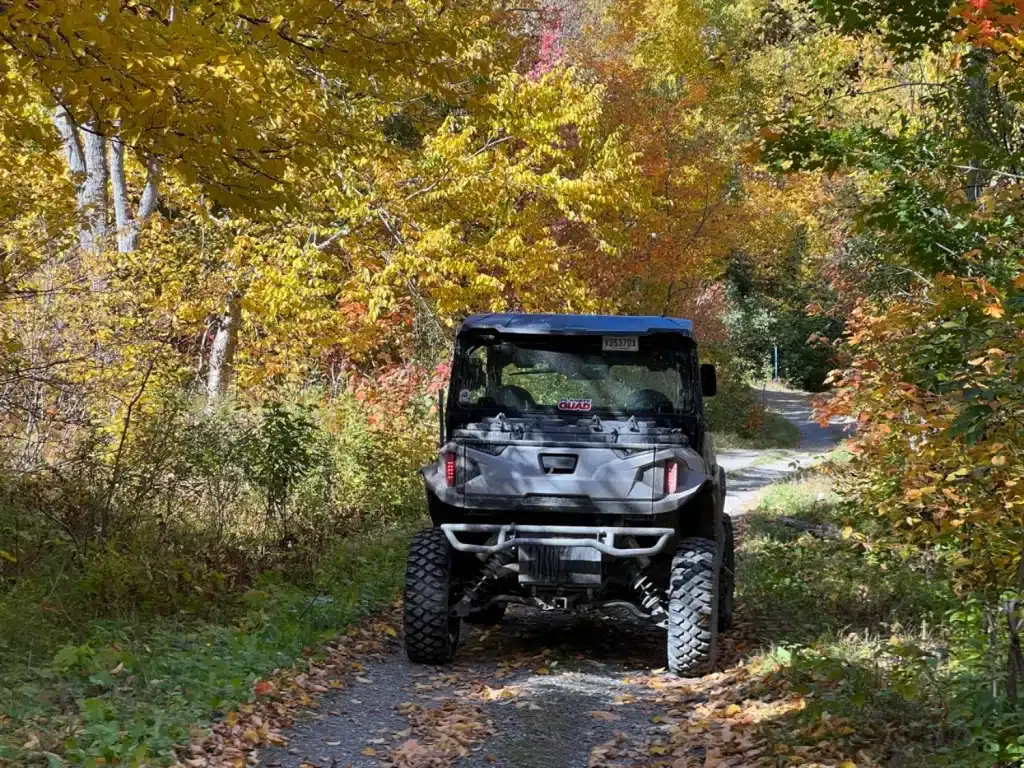
On a ride, it is important to stay well hydrated to avoid forearm cramps. Remember that alcohol does not warm you up and that you can be required to take a breathalyser test even on the trail. For food, bring energy-rich snacks made with dried fruit, almonds, cranberries or nuts, or cereal bars.
Riding for the Season
During fall, rain can change the terrain and make it slippery or boggy, while fog reduces visibility. An easy trail you rode in July can turn out to be more complicated to navigate in October. In addition to pooled water and sticky mud, dead leaves are slippery and can hide rocks and roots.
The riding advice for this time of year is to adapt to these seasonal conditions. In mud, do not accelerate abruptly, because mud sticks to the tires and causes a loss of grip.
At water crossings, the air filter must not end up underwater. Check the depth of the crossing and maintain a steady pace to avoid creating waves that could submerge the engine.
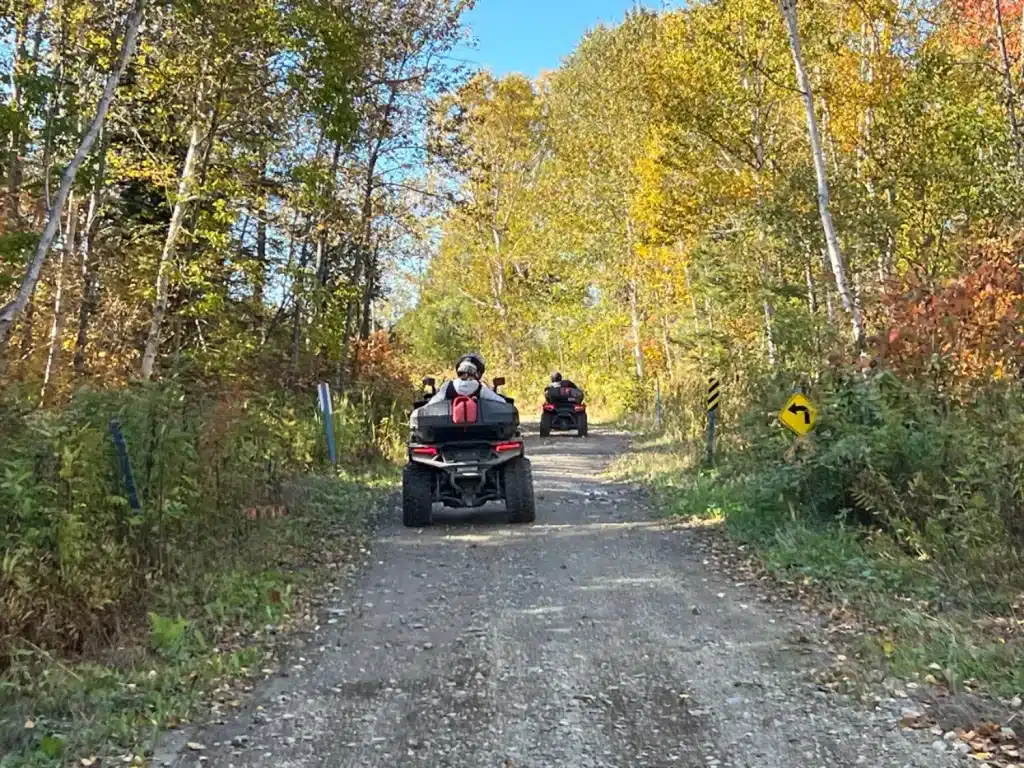
Riding in a group requires a minimum of discipline. One ATV rider, preferably an experienced one, is designated to lead. Nobody should pass that rider. Another group member brings up the rear and leaves nobody behind. In fall, increase the spacing between ATVs, because mud and leaves on the ground increase braking distances.
Everyone makes sure the ATV behind them is still visible in the mirrors, especially when changing direction. If the ATV behind turns or stops, stop to alert the rest of the group. Remember the distinctive features of the off-highway vehicle behind you, such as the size of its headlights or auxiliary lights, because at first glance, it is hard to tell one ATV from another.
Ready to Go
Do not miss out on fall rides. But remember that a good outing does not come together by chance. Take the time to check the mechanical condition of your vehicle and prepare your trip and equipment. Pack your bag with the essentials and enjoy the colours that will add a new dimension to your outings.